
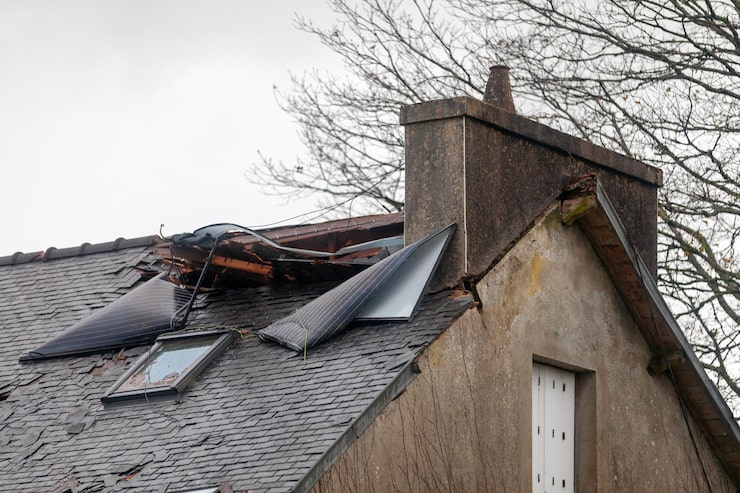
Severe weather can impact your roof in ways that aren’t always visible right away. After storms with wind, hail, or heavy rain, hidden damage can begin affecting the structure of your home. Identifying these signs early helps prevent costly repairs and keeps your roof performing at its best. Today’s blog covers the essential storm damage indicators homeowners should check.
1. Missing or Lifted Shingles
Strong winds can lift shingles, break sealant bonds, or even tear sections away. Missing or lifted shingles expose the underlayment and lead to water intrusion during the next rainfall.
What to look for:
-
Bare patches
-
Noticeable gaps
-
Raised shingle edges
Even a single missing shingle can cause a chain reaction of roof deterioration.
2. Hail Impact Marks
Hailstorms leave dents, bruises, or granule loss on shingles. These signs might not be obvious from the ground but significantly reduce shingle lifespan.
Warning signs:
-
Dark circular spots
-
Soft, bruised shingle surfaces
-
Excess granules in gutters
Left unaddressed, hail damage accelerates roof aging.
3. Damaged Flashing Around Penetrations
Storms often loosen flashing around chimneys, skylights, and vent pipes. This type of damage is a common leak source many homeowners miss.
Check for:
-
Loose metal edges
-
Rust spots
-
Gaps between flashing and shingles
Flashing repairs are essential for maintaining a watertight roof system.
4. Gutter Damage and Debris Buildup
Winds and heavy rain can clog or dent gutters, causing overflow that affects fascia boards and siding.
Indicators of storm-related gutter issues:
-
Overflow during rain
-
Detached or sagging gutters
-
Shingle granules in downspouts
A damaged gutter system quickly leads to hidden roof weakness.
5. Water Stains Inside Your Home
Roof leaks don’t always show up immediately. Sometimes water travels along internal structures before becoming visible.
Interior signs to check:
-
Brown ceiling stains
-
Damp attic insulation
-
Musty odors
These early warnings often appear days or weeks after a storm.
6. Soft Spots on the Roof Deck
Soft or spongy areas indicate moisture damage beneath the shingles. This is a sign of long-term water exposure caused by unnoticed storm impact.
Roofers detect these issues during post-storm inspections, helping homeowners avoid structural failure.
7. Wind-Damaged Ridge Caps
Ridge caps are more exposed than other shingles and often the first to show storm stress.
Look for:
-
Cracks
-
Loosened caps
-
Missing sections
If ridge caps fail, water can easily enter the roof peak.
Conclusion
Storm damage isn’t always visible, but even small roofing issues can grow into expensive problems if ignored. Checking your roof for missing shingles, hail marks, damaged flashing, or gutter issues helps protect your home year-round. Early detection ensures a longer-lasting, safer roofing system.