
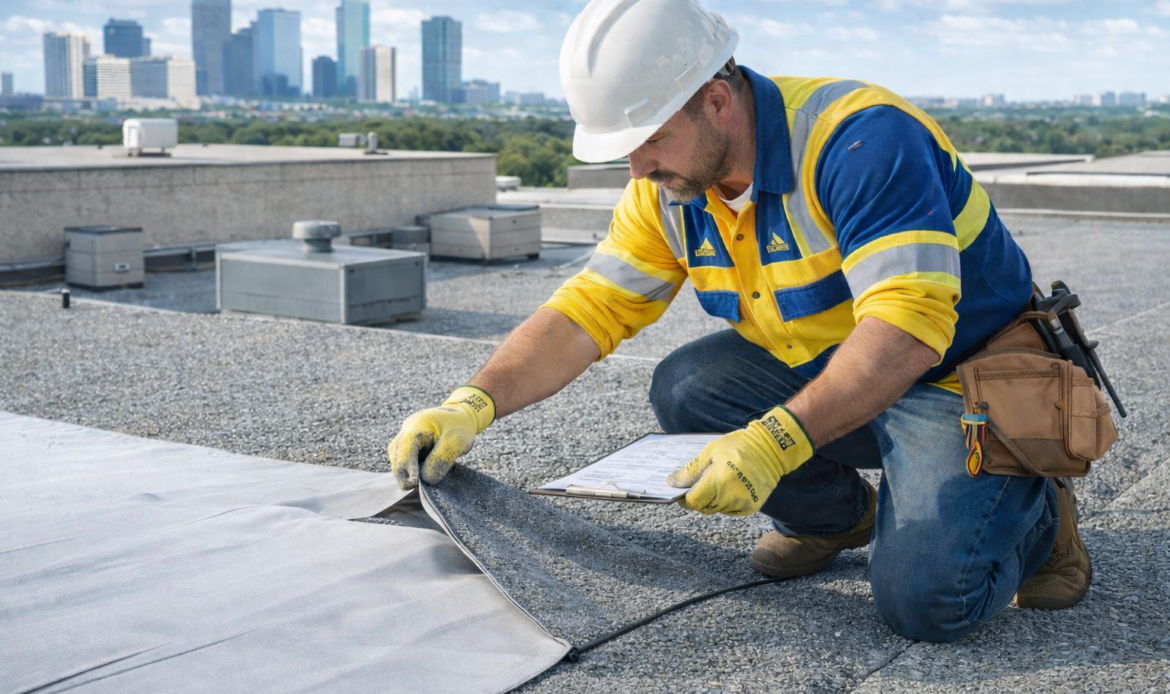
Commercial roofing systems are major investments, and one of the most common questions business owners ask is:
“How long will my commercial roof actually last?”
In Texas, where extreme heat, storms, and seasonal weather changes place constant stress on roofing systems, lifespan can vary significantly depending on material type, installation quality, and maintenance. Understanding how long different systems last — and when a commercial roof inspection, commercial roof repair, or commercial roof replacement is required — helps property owners plan budgets and avoid costly surprises.
Why Commercial Roof Lifespan Varies in Texas
Texas weather is one of the biggest factors affecting commercial roof longevity.
Commercial roofs must withstand:
- Intense UV exposure
- High summer temperatures
- Sudden heavy rain
- Wind and storm activity
- Temperature expansion and contraction
Even well-installed systems can deteriorate faster without proper maintenance. This is why regular commercial roof inspection is critical for protecting roof lifespan.
Average Lifespan of Common Commercial Roofing Systems
While every building is different, the following estimates reflect typical performance under Texas conditions when proper maintenance is followed.
TPO Roofing Lifespan
TPO roofing systems typically last 15 to 25 years.
Their reflective surface helps reduce heat absorption, which is especially beneficial in hot climates. However, seam integrity and flashing must be monitored closely. Routine inspections and timely commercial roof repair can significantly extend TPO performance.
EPDM Roofing Lifespan
EPDM roofs often last 20 to 30 years when properly maintained. Their rubber-based material provides flexibility and resistance to temperature movement. EPDM systems perform well on large commercial buildings where expansion and contraction occur frequently. Periodic inspections help prevent seam separation and water intrusion.
Modified Bitumen Roofing Lifespan
Modified bitumen systems generally last 20 to 25 years. Because these roofs consist of layered materials, surface wear can occur over time. Early detection through professional inspection allows repairs to be completed before deeper layers are affected.
Built-Up Roofing (BUR) Lifespan
Built-up roofing systems can last 25 to 30 years with proper care. These roofs provide excellent waterproofing but require consistent maintenance due to multiple layers and drainage sensitivity. When aging materials become saturated, commercial roof replacement may be required.
Factors That Shorten Commercial Roof Lifespan
Several issues can reduce roof lifespan if not addressed early:
- Poor drainage or ponding water
- Lack of routine inspections
- Delayed repairs
- Improper installation
- Storm or hail damage
Scheduling routine commercial roof inspections helps identify these issues early, before they affect insulation or interior spaces.
When Commercial Roof Repair Is the Right Choice
Commercial roof repair is often recommended when:
- Damage is isolated
- The roofing membrane remains structurally sound
- Moisture has not penetrated insulation
- The roof is still within its service lifespan
Timely repairs help extend roof life and delay full replacement.
When Commercial Roof Replacement Becomes Necessary
Commercial roof replacement may be required when:
- Repairs become frequent
- Widespread membrane deterioration exists
- Insulation is waterlogged
- The roof has reached the end of its expected lifespan
Replacement allows building owners to upgrade to modern systems with improved energy efficiency and longer warranties.
How Commercial Roof Installation Affects Longevity
Commercial roof installation plays a major role in determining lifespan.
Improper installation can lead to:
- Early seam failure
- Water intrusion
- Voided warranties
- Reduced system performance
Professional installation ensures correct attachment, drainage design, and long-term reliability.
The Importance of Preventive Maintenance
Preventive maintenance is one of the most effective ways to extend commercial roof lifespan.
Maintenance typically includes:
- Scheduled inspections
- Drain cleaning
- Sealant maintenance
- Minor repairs
According to the National Roofing Contractors Association (NRCA), routine commercial roof maintenance significantly extends service life and reduces long-term ownership costs.Following industry standards helps protect both the roofing system and the building beneath it.
Planning Ahead Saves Business Owners Money
Understanding roof lifespan allows businesses to plan capital improvements instead of reacting to emergencies.
Proactive planning helps:
- Avoid unexpected downtime
- Prevent interior damage
- Control long-term costs
- Maintain property value
With proper inspections and maintenance, many commercial roofs reach or exceed their expected lifespan.
Commercial roofs in Texas face demanding conditions, but with proper planning and professional care, they can deliver long-term performance. Understanding roofing system lifespans — and knowing when to schedule commercial roof inspection, commercial roof repair, commercial roof installation, or commercial roof replacement — allows business owners to protect their investment with confidence.
At AO1 Roofing and Construction, our team helps commercial property owners make informed roofing decisions backed by experience, inspections, and long-term planning. With the right approach and trusted guidance, commercial roofing becomes a manageable asset rather than an unexpected liability.
Frequently Asked Questions
How long should a commercial roof last in Texas?
Most commercial roofing systems last between 15 and 30 years depending on material type, installation quality, and maintenance frequency.
How often should commercial roofs be inspected?
Commercial roofs should be inspected at least twice per year and after major storms.
Can repairs extend the life of a commercial roof?
Yes. Timely commercial roof repair can significantly extend roof lifespan and delay replacement.
Does heat reduce roof lifespan?
Yes. Prolonged UV exposure and high temperatures accelerate material aging without proper protection and maintenance.
Is replacement always necessary at the end of lifespan?
Not always. Some systems qualify for restoration depending on condition and inspection findings.